
How to Negotiate a Wedding Room Block at Any Resort
The resort sends a room block proposal. The couple signs it. Nobody negotiates anything. I watch this happen constantly, and it costs real money every single time. That first proposal is an opening offer, not a final one. Group contracts are written to protect the hotel, not you. Sales teams assume you won’t push back, because most couples don’t know they can.
Disclosure: This post may contain affiliate links. Teach Travel Discover is a participant in the Amazon Services LLC Associates Program as well as other affiliate programs. These are designed to provide a means for us to earn fees by linking to Amazon and affiliated sites at no extra cost to you. Please see our Privacy Policy for more details.

I’m Sully, a romance travel specialist, and I negotiate wedding room blocks every week. So I’m going to tell you straight: almost everything in that contract can move. The rate, the attrition clause, the cutoff date, the perks. All of it. You just have to know what to ask for and how to ask.
This guide covers how blocks actually work, what your RFP needs, and which contract terms bite. It also covers the concessions resorts will give you but never volunteer.
How Resort Room Blocks Work Before You Negotiate Anything
A room block is a set of rooms held at a locked group rate for your guests. In exchange, the hotel expects a pickup guarantee. That means a minimum percentage of those rooms must actually get booked. This guarantee is the centerpiece of every negotiation that follows. Understand it, and you’ll see exactly where the hotel needs you.
Here are the three numbers that frame every conversation. The U.S. standard starts at roughly 10 rooms per night for a contracted group rate. Hotels typically require 80% to 90% of the block to be booked, or penalties kick in. Unclaimed rooms usually release back into general inventory 21 to 30 days before arrival.
Walk in knowing those benchmarks and the whole dynamic shifts. Sales managers talk differently to couples who understand block mechanics. You stop being a lead they can steer. You become a client they need to impress. Prepared couples get sharper proposals and a much more cooperative tone.

Wedding Room Block Negotiation Starts With a Strong RFP
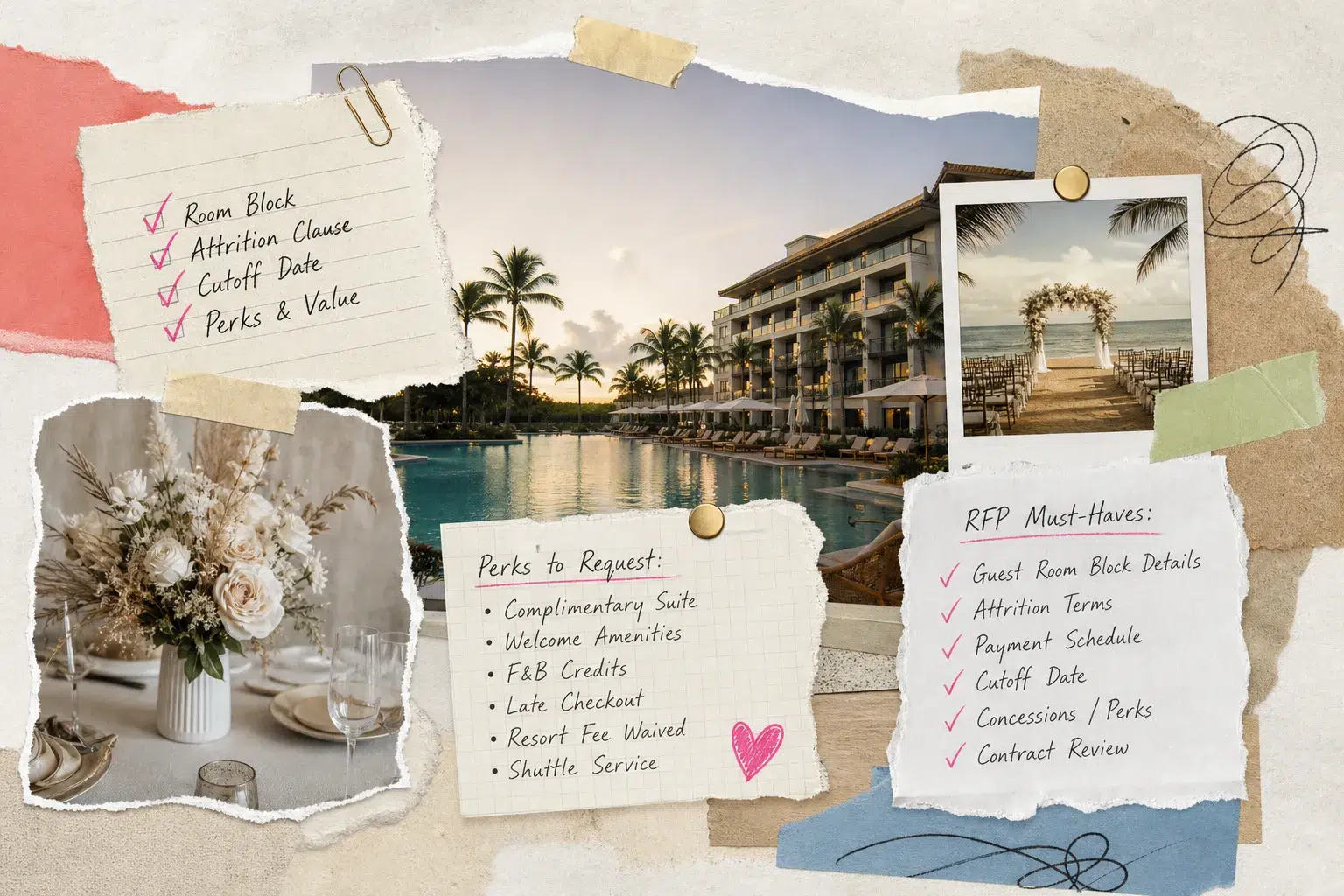
A strong request for proposal tells the hotel exactly what you need. That forces them to quote accurately and compete for your business. Your RFP for a hotel block should include:
- Your wedding date and check-in/check-out window
- A night-by-night room count
- Your room mix: kings, doubles, suites, accessible rooms
- Your target group rate range
- Your preferred reservation method and cutoff date
- Any concessions you want addressed upfront
Send it to at least three properties at the same time. Competition between hotels is your best leverage, and creating it costs you nothing.
Be specific in your language, too. Ask each property to quote the group rate, taxes, resort fees, and cutoff date. Ask for the attrition policy, deposit requirements, and cancellation terms in writing. Then ask what concessions they’ll include, like comp rooms, breakfast, Wi-Fi, or suite upgrades. Vague inquiries get vague proposals. Specific requests signal you know what you’re doing, and the sales team responds accordingly.
One underused move for destination couples: contact the local Convention and Visitors Bureau. CVBs leverage their hotel relationships to advocate for you and gather competing proposals. They sometimes surface incentives you’d never see if you approach a property directly. Hotels take CVB referrals seriously because the bureau brings them business all year, not just once.

The Contract Terms Most Couples Sign Without Questioning
Start with the attrition clause, because this is where couples get hurt. If your guests don’t fill the required percentage, you pay for the empty rooms. Run the math on a 30-room block at 80% attrition. You’re on the hook for 24 rooms being filled. If guests only book 18, you pay the six-room shortfall. At $159 per night over two nights, that number gets ugly fast.
The industry standard is 80% to 90%, but many properties will accept less. Pushing for 70% or below is a completely reasonable ask. Also negotiate the penalty formula itself. Penalties calculated on net revenue cost you less than penalties on the full room rate. Read the exact formula before you sign anything.
Next, the cutoff date. That’s when unsold rooms revert to standard pricing and availability. Hotels open at 30 days, but 21 days is achievable almost everywhere. Some markets will go to two weeks. Every extra day gives your slow-moving cousins more time to book.
On deposits, ask for a phased structure tied to pickup milestones. A single lump sum at signing drains cash you need for other vendors. Sales teams see these requests all the time. They go unasked because couples don’t know to raise them.
Finally, watch the quoted rate for hidden fees. Resort fees, service charges, gratuities, and parking are commonly excluded from the headline number. Get it in writing whether those fees are waived, capped, or charged in full. A $189 room stops looking like a deal once a $45 resort fee lands on top.

Attrition Clause: What to Push For
Ask for three things here. First, an attrition threshold at 70% or lower. Second, penalties calculated on net revenue, not the full room rate. Third, a resale credit clause. That language requires the hotel to credit resold rooms back to your pickup count.
Here’s why that third one matters. Without it, the hotel can resell your unclaimed rooms at full price. Then they charge you attrition penalties on those same rooms. They get paid twice, and you fund it. A resale credit clause is a standard request in group contracting. Any hotel that refuses to include one is telling you something.

Cutoff Date and Deposit Structure
A 21-day cutoff is achievable at most properties. Some will go to two weeks depending on market conditions. Pair that with phased deposits tied to room pickup milestones. Both asks protect your cash flow and give your guests breathing room. Neither one is exotic, so make them every time.
Perks and Concessions Worth Requesting at Every Resort
Comp rooms come first, because they’re the highest-value concession on the table. The common U.S. formula is one free room night per 40 to 50 paid room nights. A 30-room block over two nights generates 60 room nights. That should earn at least one free night on your suite. Get the formula stated explicitly in the contract, tied to a realistic pickup number. Hotels routinely leave this off proposals when couples don’t ask.
Beyond comp rooms, a hotel holding your group business will often agree to extras. Common value-adds include:
- Waived or reduced resort fees for block guests
- Complimentary Wi-Fi in all block rooms
- Early check-in and late check-out for select rooms
- Welcome bag delivery to guest rooms
- A private hospitality suite for the wedding party
- Shuttle service to the ceremony or reception venue
- Discounted food and beverage pricing for group events
Know your property tier before you set a rate target. Three-star and four-star hotels offer the steepest group discounts, averaging around 24% to 25% off. They want your revenue certainty, so they flex on value-adds too. Five-star properties hold closer to 15% off because their demand is steadier. That context tells you when an opening offer still has room to move.

What to Review Before You Sign Any Room Block Contract
Verify the group rate is locked and cannot increase after signing. Confirm resort fees are waived or capped for block guests. Check that the attrition clause spells out the penalty calculation, not just a percentage. And make sure every promised concession appears in the contract body itself. A concession that isn’t in writing does not exist at check-in.
Then ask the operational questions. What happens if you need to shrink the block before the cutoff? Does the group rate extend to guests arriving early or staying late? Destination wedding guests almost always build multi-day trips, so this one matters. How do guests book, and is the link tracked so you can monitor pickup? The answers tell you how smoothly this block will actually run.
One red flag deserves its own mention. If the contract says nothing about reselling unused rooms, stop. You could pay penalties on rooms the hotel quietly re-books at full price. Ask for the resale credit clause. Watch how they react.

Getting Every Point Across the Finish Line
Negotiating a wedding room block isn’t adversarial. Hotels want your business, and sales teams have more flexibility than their opening proposal suggests. The couples who walk away with comp suites and softer attrition terms aren’t lucky. They’re the ones who knew to ask. Send a detailed RFP to multiple properties. Learn what’s standard before you counter. Put every concession in writing before you sign.
This is exactly the wedding room block negotiation process I run for every couple I work with. I have standing relationships with resort sales teams. I know which properties respond to which asks. I can spot aggressive attrition language on the first read, because I’ve read hundreds of these contracts. That’s context you can’t build on a tight planning timeline while doing this once.
If you’d rather have someone in your corner who does this every week, book a call. Your guests’ experience at the hotel matters as much as the ceremony. A well-negotiated room block is where that experience starts.