
How Do I Plan a Luxury Destination Wedding on a Budget?
Disclosure: This post may contain affiliate links. Teach Travel Discover is a participant in the Amazon Services LLC Associates Program as well as other affiliate programs. These are designed to provide a means for us to earn fees by linking to Amazon and affiliated sites at no extra cost to you. Please see our Privacy Policy for more details.
How do I plan a luxury destination wedding on a budget? Start with the number most couples never look at. Not the cost of the wedding. The cost per guest.
In Mexico, a destination wedding averages $10,000 to $18,000 total. The Caribbean sits at $12,000 to $16,000. Europe starts around $20,000. Now put that next to a 200-person reception at a banquet hall back home, where every extra body is another plate, another chair, another gift bag. The math couples run in their heads is wrong, and I’ve spent ten years watching the moment it clicks.
Luxury on a budget isn’t about cutting corners. It’s four decisions made early: where, when, package or à la carte, and where the money shows up in photos. Get those right and the wedding looks like it cost twice what it did.
One free example before we get into it. A Thursday in November at the same Mexican resort as a Saturday in March saves you thousands. Same beach. Same food. Different invoice.
Why Do Destination Weddings Cost Less Than Couples Assume?
Because the per-guest cost runs $200 to $450 and the guest list is naturally smaller. A 40-person resort wedding often costs less than a 200-person hometown reception.
The real per-guest numbers
In Mexico, plan on $200 to $350 per guest. In the Caribbean, $250 to $450. Europe runs higher, but the comparison still holds.
A 200-person reception at a local banquet hall can cost more than a 40-person curated event at a Mexican resort, even after you factor in flights and rooms. It depends on your local venue rates and catering tier, but I see it play out constantly.

Why a hometown wedding scales so badly
A traditional wedding punishes you for every name on the list. Industry planners estimate $100 to $300 or more in incremental cost per guest at a U.S. reception venue. Another plate. Another chair or place setting. Or a favor nobody takes home.
A destination wedding compresses all of that. The per-guest economics reflect it.
The smaller list works for you
A micro destination wedding, usually 50 guests or fewer, is where the savings concentrate. When travel is required, not everyone comes, and everyone knows it. That takes the pressure off inviting every coworker and third cousin.
Fewer guests means a smaller venue footprint, a shorter catering order, and a fraction of the décor bill. And I’m going to tell you straight: a 30-person dinner on a Riviera Maya beach photographs more luxuriously than a 200-person ballroom, at any budget.
Where Should You Have a Luxury Destination Wedding on a Budget?
Mexico for $15,000 to $20,000 budgets and the widest resort choice. The Caribbean for a step up. Europe only for very small groups or budgets over $25,000.
Mexico
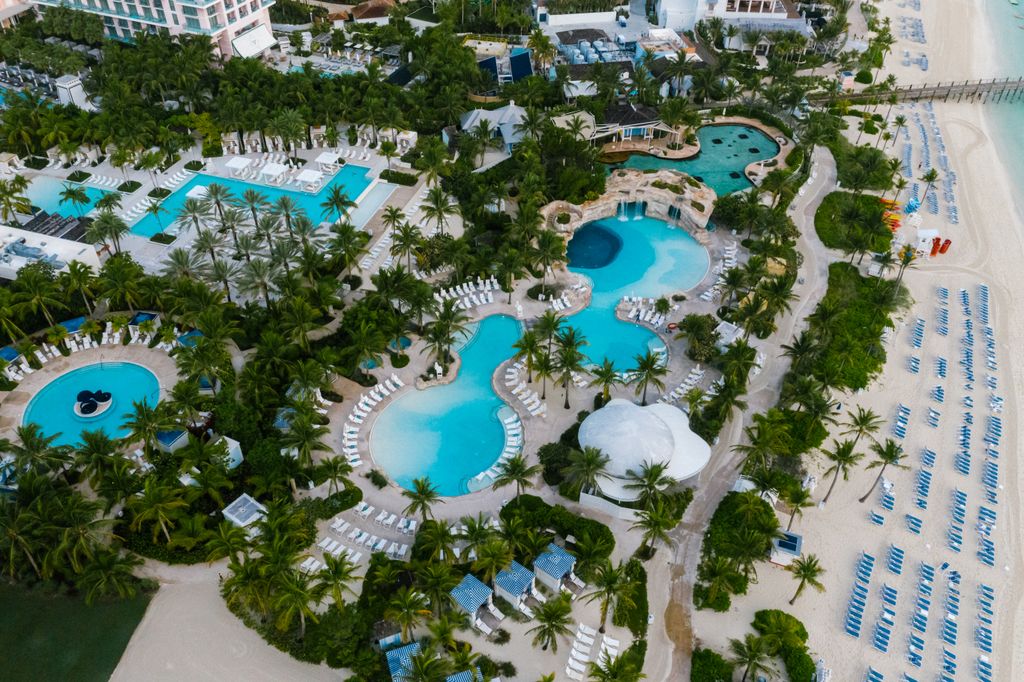
The lowest cost floor and the most resort variety for small to mid-size groups. If you’re working with $15,000 to $20,000, this is where I start you. My Mexico cost breakdown shows what couples are actually spending there in 2026.
The Caribbean
The mid-range option. The properties carry a slightly more elevated feel and the pricing follows. Worth it when the guest list can handle a longer flight and the couple wants a resort that feels less like a resort.
Europe
Extraordinary venues. Significantly more complexity and cost. Europe makes sense when the budget is north of $25,000 or the guest count is very small. That’s my rule and I don’t bend it. A dozen people in Tuscany is a wedding. Forty people in Tuscany is a logistics project with no all-inclusive safety net.
Picking the market isn’t a preference call. It’s matching the destination’s cost structure to three things: your guest count, your budget ceiling, and what your guests can realistically manage. Get those three aligned and the destination picks itself.
When Should You Book to Save the Most?
Off-season dates cut resort and room rates 20 to 40 percent. A Thursday or Friday cuts venue costs 30 to 60 percent. Combined, that’s $4,500 to $8,500 before you negotiate anything.
Off-season
Off-season dates reduce resort packages and accommodation rates by 20 to 40 percent. The same resort, the same rooms, the same coordinator. The only difference is the calendar.
Midweek
Thursday and Friday dates cut venue costs 30 to 60 percent compared to a Saturday at the same property. Your guests are already taking the week. Nobody cares which day the ceremony lands on.
Stack them
Book a Thursday in November instead of a Saturday in March at the same Mexican resort and you can be looking at thousands of dollars in savings for an equivalent experience. Together, an off-season midweek date produces $4,500 to $8,500 in savings before a single line item gets negotiated.
Does that make sense? Timing is the highest-leverage decision in this entire process, and it costs you nothing.

Should You Book a Resort Package or Go À La Carte?
Package, almost always. À la carte catering alone runs $250 to $500 per guest at the luxury tier, and a comparable resort package came in about 30 percent cheaper.
What the package bundles
A typical all-inclusive wedding package rolls the ceremony venue, catering, bar service, setup, and basic coordination into one contract. Price those separately through local vendors and catering alone is $250 to $500 per guest at the luxury tier. Add venue rental, bar, and a day-of coordinator and the à la carte number climbs fast.
One caution I give every couple: “all-inclusive” has no legal definition. Get the inclusions list and the exclusions list in writing before you compare anything.
A real comparison
An à la carte setup at a comparable Mexican resort came to roughly $10,800. The equivalent resort package was $7,500. That’s about $3,300, or 30 percent. Not a rounding error. A meaningful chunk of your total budget.
The group perks nobody asks for
The package price is only part of the value. Resorts have a formal group benefits structure most couples never see, because they never ask. Complimentary room nights tied to room block minimums. Suite upgrades for the couple. Welcome cocktail hours. Spa credits. Preferred vendor pricing.
Many resorts start unlocking these at five rooms for three nights. I structure my groups at ten rooms because that’s where the perks get real. Either way, they only exist for the couple who knows to request them and frames the ask correctly.

Outside vendor fees
Before you assume bringing your own photographer, DJ, or florist saves money, check the resort’s outside vendor policy. Most charge $500 to $1,500 per outside vendor just to walk through the gate. Three vendors and you could be at $4,500 in fees, which wipes out whatever you saved by going outside the list.
That’s not a reason to skip outside vendors. A destination photographer you trust is worth every dollar. It’s a reason to run the full comparison before you commit.
Where Should You Spend and Where Should You Cut?
Spend on photography and ceremony florals. Cut stationery, full open bar, a big wedding party, and the live band. The cuts don’t show up in a single photo.
The two splurges
Photography follows you forever. At $6,000 to $15,000 for destination coverage it’s a real investment, and one editorial image from a skilled photographer does more for the perception of luxury than any other vendor on your list. Budget here without apology.
Florals for the ceremony arch and reception centerpieces are second. They anchor both spaces and photograph at scale in a way small décor details never do. Put your décor money in those two places before anything else.
The smart swaps

- Digital invitations. Luxury destination stationery runs $500 to $1,500 or more. Nobody photographs the invitation.
- Signature cocktail hour. Two or three specialty drinks photograph identically to a full open bar and cost far less.
- Smaller wedding party. Fewer bouquets, fewer outfits, fewer problems.
- DJ over live band. Often thousands saved depending on band size and travel, same dance floor.
None of these show up in your photos. All of them show up in your budget.
What Does a Realistic Budget Look Like?
For 30 to 50 guests at $15,000 to $20,000: 40 to 50 percent to the resort package, 15 to 20 to photography, 10 to 15 to florals, 8 to 10 each to music and planning.
The allocation
Treat this as a working example, not a rule. Your destination and vendor choices will shift it.
- Resort package (or venue plus catering): 40 to 50 percent
- Photography: 15 to 20 percent
- Florals and ceremony décor: 10 to 15 percent
- Music and entertainment: 8 to 10 percent
- Planning and coordination: 8 to 10 percent
- Stationery, welcome bags, legal fees: fixed line items from what’s left
Legal fees are not an afterthought
For U.S. couples marrying legally in Mexico, plan on $700 to $2,000 total once you count apostilled documents, certified translations, the required health screening, and the civil ceremony fee. In Baja California Sur specifically, a civil ceremony outside the registry office runs about $4,233 MXN, roughly $210 to $230 USD depending on the exchange rate.
These don’t compress with off-season discounts or group negotiation. Budget them as certainties.
The order of decisions
The sequence matters as much as the money. Five decisions, in this order:
- Set a firm budget ceiling before any vendor conversation. Every decision flows from this number.
- Choose location and season together. The destination and the date are one financial decision. Separate them and the gap costs you.
- Decide package versus à la carte before you approach a venue. It changes which properties you evaluate and how you talk to them.
- Get the room block and group perks in writing before you sign. Verbal promises from a sales team are not enforceable. If it’s not in the contract, it doesn’t exist.
- Book the photographer and the legal appointment first. Both have the tightest availability of anything on this list, and neither can be substituted at the last minute.

What Does a Planner Get You That You Can’t Get Yourself?
Direct resort sales relationships that put comp nights, upgrades, and vendor pricing into the contract before you sign, plus a timeline that stops surprise fees.
The perks that never appear on the menu
I don’t book through the portal you see. I work with resort sales teams directly, and that’s how complimentary room nights, suite upgrades, welcome amenities, and preferred vendor pricing get written into a contract before anyone signs it. Every one of my engagements starts with a one-on-one discovery call built to find exactly those openings. No couple should negotiate blind against a sales team that does this every day.
The three ways budgets fail
I see the same patterns every year. Surprise vendor fees found after the contract is signed. A missed room block deadline that triggers a rate change or an attrition penalty. Scope creep from last-minute additions made under pressure.
I can’t make this up: I have personally booked a room at a resort to keep a client out of an attrition penalty. That’s what happens when nobody is watching the deadline. A structured process maps the full scope into a timeline at the start, so every decision is made informed instead of reactive.
The difference between working with a planner and doing it yourself isn’t comfort. It’s the difference between a plan built around your numbers and a glossy brochure that never mentions them.

FAQ: Luxury Destination Wedding on a Budget
How do I plan a luxury destination wedding on a budget?
Four decisions in order: pick a destination with a favorable cost structure (Mexico for most budgets), lock an off-season or midweek date, price all-inclusive packages before à la carte, and spend on photography and florals first.
What costs should I prioritize for a budget-friendly destination wedding?
Photography and ceremony florals define the visual luxury. The resort package is the largest fixed cost and the biggest savings opportunity. Stationery, bar style, and entertainment format are where cuts don’t show.
What is a realistic budget for a destination wedding that still feels luxurious?
For 30 to 50 guests in Mexico or the Caribbean, $15,000 to $20,000 is realistic with a bundled resort package, an off-season or midweek date, and disciplined spending on high-impact categories.
What hidden costs should I watch for in a destination wedding budget?
Outside vendor fees ($500 to $1,500 each), legal document costs ($700 to $2,000 for U.S. couples in Mexico), room block penalties for missed minimums, and last-minute scope additions.

The Bottom Line
The couples who pull this off don’t have bigger budgets. They have a plan. Location, timing, package structure, and a clear splurge-versus-save framework. Four levers, applied early, produce a wedding that looks like it cost twice what it did.
If you’re ready to turn the framework into a plan for your actual wedding, book a free consultation. One conversation. Your numbers, your destination, and a concrete plan you can act on the same week.